
בית אור החיים
קהילה משיחית
BEIT OR HA'CHAIM
MESSIANIC JEWISH CONGREGATION VIENNA


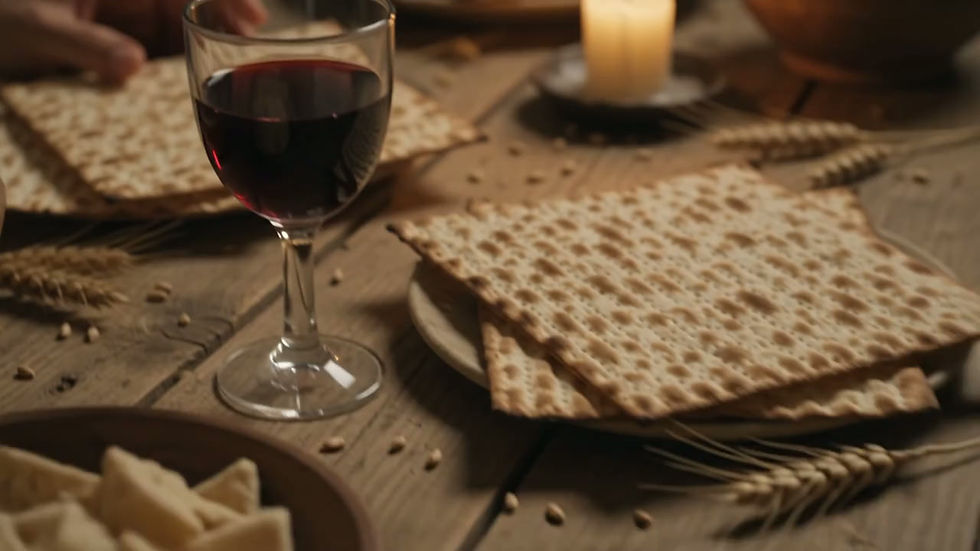
God’s Appointed Feasts – מועדי יהוה
The biblical feasts of God are central to our Messianic Jewish faith. Leviticus 23 describes the appointed times established by God that accompany Israel throughout the biblical year.
These include Pesach, Chag HaMatzot, Yom HaBikkurim, Shavuot, Yom Teruah, Yom Kippur, and Sukkot. As a Messianic Jewish congregation, we understand these appointed times within their Jewish and biblical context and also in the light of Yeshua HaMashiach, the Messiah of Israel.
In addition to these appointed times established in the Torah, we also commemorate Purim and Hanukkah, which recall important events in Jewish history and God’s preservation of Israel.

_edited.jpg)

Feast of Tabernacles (Sukkot)
סוכות
Passover (Pesach)
פסח
The deliverance from Egypt and the beginning of God’s plan of salvation.
From a Messianic perspective, we recognize Yeshua as the true Passover Lamb, whose blood delivers us from death.

Feast of Unleavened Bread
חג המצות
The Feast of joy, the presence of God, and the coming Kingdom.
From a Messianic perspective, we see Sukkot as a foreshadowing of the time when the Messiah will dwell among us and all nations will worship the King.
Day of Atonement (Yom Kippur)
יום כיפור


The Day of Atonement and purification of Israel.
We believe that Yeshua, as our High Priest, offered the perfect atoning sacrifice that permanently justifies us before God.
Seven days without chametz (leaven), symbolizing purification and holiness.
We see in Yeshua the one who was without sin and who calls us to live a holy life.

Firstfruits
יום הביכורים
The feast of the first harvest and the beginning of new life.
In Yeshua’s resurrection, we see the fulfillment of this feast, for he is the “firstfruits” of those who have risen from the dead.
_edited.png)
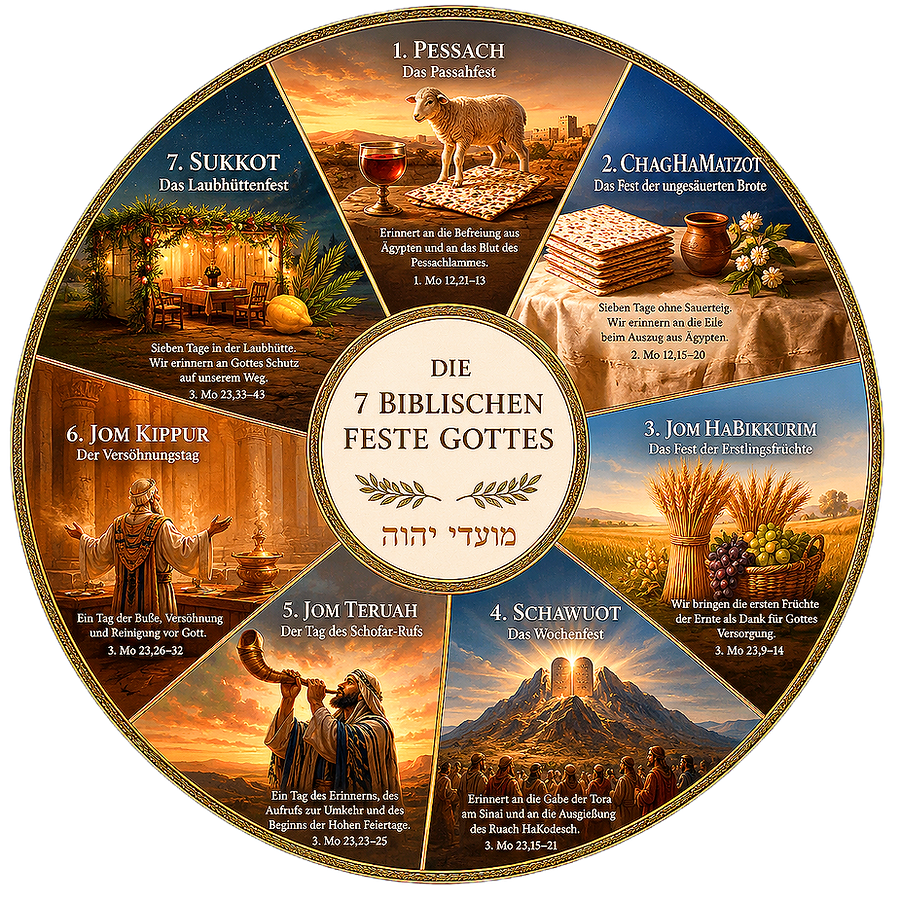
Feast of Weeks (Shavuot)
שבועות
_edited.png)
Feast of Trumpets (Yom Teruah)
יום תרועה
The sound of the shofar calls us to repentance and watchfulness.
From a Messianic perspective, we see in this feast a prophetic announcement of the Messiah’s return at the sound of the last trumpet.
The giving of the Torah at Mount Sinai and later the outpouring of the Ruach HaKodesh.
For us, Shavuot brings together God’s Word and God’s Spirit, which together renew our lives.
JEWISH FESTIVALS AND COMMEMORATIONS
In addition to the seven biblical appointed times described in Leviticus 23, there are other significant festivals and commemorations of the Jewish people. These include especially Purim and Hanukkah. They are not among the seven appointed times established by God, but they have important historical and biblical significance.

Purim
פּוּרִים
Purim commemorates the deliverance and preservation of the Jewish people in the time of Esther, when the threat of their destruction was averted.
The Book of Esther shows in a remarkable way how God’s providence and faithfulness can work even when hidden. Although God’s name is not explicitly mentioned in the Book of Esther, we recognize His protecting hand and His faithfulness to His people and His promises.
For us, Purim is therefore a festival of joy, gratitude, and remembrance of God’s preservation of Israel.
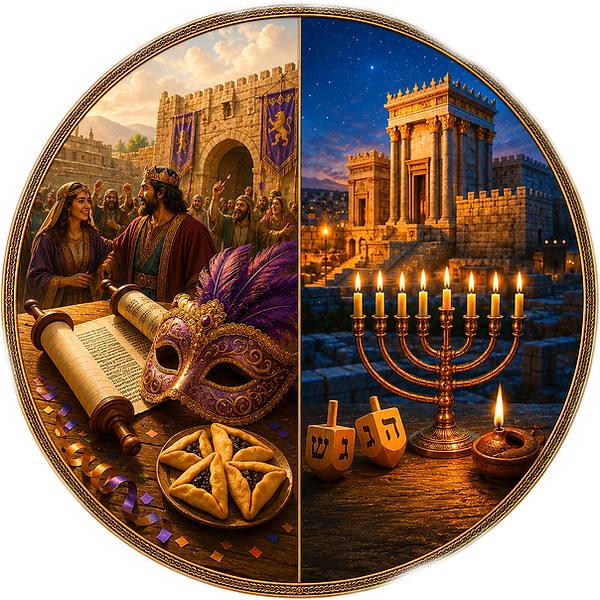
Hanukkah
חנוכה
Hanukkah commemorates the rededication of the Temple in Jerusalem after its desecration during the time of the Maccabees and the Jewish people’s determined commitment to remaining faithful to the God of Israel.
The festival reminds us of faithfulness, holiness, and the preservation of Jewish identity even in times of persecution and religious pressure.
Hanukkah is also mentioned in the Brit Chadasha as the Feast of Dedication. During this festival, Yeshua was in Jerusalem and walked in the Temple in Solomon’s Colonnade.
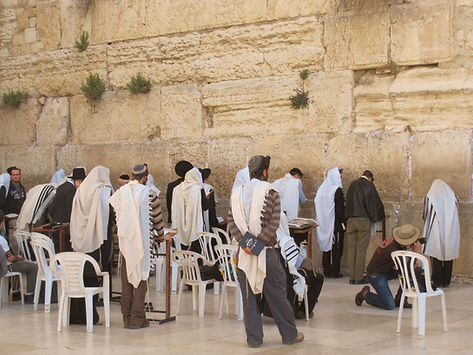
Do you think it’s too Jewish?
Then scroll down.


The Menorah
Revelation 1:20
“The mystery of the seven stars which you saw in My right hand, and the seven golden lampstands: The seven stars are the angels of the seven congregations, and the seven lampstands are the seven congregations.”

Torah, Laws & Commandments
Matthew 5:17–18
“Do not think that I came to abolish the Torah or the Prophets; I did not come to abolish, but to fulfill. For truly I say to you: Until heaven and earth pass away, not one jot or one stroke shall pass from the Torah until all is fulfilled.”

Shabbat
Isaiah 66:23
“And it shall come to pass that from one New Moon to another, and from one Sabbath to another, all flesh shall come to worship before Me,” says the LORD.
_edited.jpg)

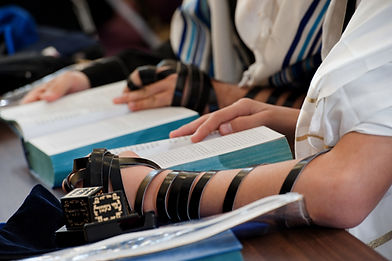
Tefillin & Mezuzah
Deuteronomy 6:8–9
“And you shall bind them as a sign on your hand, and they shall be as frontlets between your eyes. And you shall write them on the doorposts of your house and on your gates.”
Yeshua in the Light of the Torah, the Prophets, and the New Testament
Deuteronomy 6:4–6
“Hear, O Israel: The LORD our God, the LORD is one!”
“And you shall love the LORD your God with all your heart, with all your soul, and with all your strength. And these words which I command you today shall be in your heart.”
ישוע
Mark 12:29–31
Yeshua answered him, “The first of all the commandments is: ‘Hear, O Israel: The LORD our God, the LORD is one.’”
“And you shall love the LORD your God with all your heart, with all your soul, with all your mind, and with all your strength.”
“The second is this: ‘You shall love your neighbor as yourself.’ There is no other commandment greater than these.”

BAPTISM
We understand baptism (Tevilah) within the context of the biblical-Jewish practice of immersion in water. It is a visible expression of repentance, faith, and a new life with God.
In the Brit Chadasha, those who recognize Yeshua HaMashiach as the Messiah and come to faith are called to repentance and baptism. Full immersion symbolizes turning away from the old life and beginning a life of following the Messiah.
For us, baptism itself is not a human work by which a person earns salvation. Rather, it is a conscious response of faith and obedience to God.
“Repent, and let every one of you be baptized in the name of Jesus Christ for the forgiveness of sins.”
Acts 2:38