
בית אור החיים
קהילה משיחית
BEIT OR HA'CHAIM
MESSIANIC JEWISH CONGREGATION VIENNA


CHRISTIAN TRADITIONS & DENOMINATIONS
Answers to Important Questions About Jesus, God, Faith, and the Bible
From Catholic and Orthodox to Protestant, Evangelical, and Messianic Jewish
Why are there so many Christian churches, denominations, and traditions? What is the difference between Catholics and Protestants? Why do Orthodox Christians worship differently? Why do Adventists observe the Sabbath? What do Baptists, Pentecostals, or Mormons believe?
At Beit Or Ha'Chaim, we do not want to set these traditions against one another. We explain their main characteristics in a clear and understandable way while also exploring a question that is becoming increasingly important to many people:
What did faith look like in the original Jewish context of the Bible and in the time of Jesus – Yeshua?
ROMAN CATHOLIC CHURCH
The Catholic Church brings together the Bible, Church tradition, and the teaching authority of the Church. The Pope, the Eucharist, the sacraments, Mary, and the saints all play an important role.
What connects us:
Faith in God, the Holy Scriptures, prayer, the Messiah, love of one's neighbor, and the importance of biblical history.
What distinguishes us:
At Beit Or Ha'Chaim, we place greater emphasis on the Jewish background of the Bible, the Shema Yisrael, Torah, Shabbat, and the biblical feasts. The papacy and the veneration of saints are not part of our faith practice.


ORTHODOX CHRISTIANITY
Orthodox Christianity includes, among others, the Greek Orthodox, Russian Orthodox, Serbian Orthodox, and Romanian Orthodox Churches. Liturgy, icons, the Church Fathers, and continuity with the early Church are of great importance.
There are also the Oriental Orthodox Churches, including the Coptic, Armenian, and Syriac Orthodox traditions.
What connects us:
Reverence for God, a strong tradition of prayer, periods of fasting, ancient forms of worship, and a deep awareness of the history of faith.
What distinguishes us:
Beit Or Ha'Chaim places greater emphasis on the biblical order, Shabbat, and the biblical feasts rather than on later Orthodox liturgy or the tradition of icons.
EVANGELICAL & PROTESTANT CHURCHES
The Reformation gave rise to Lutheran, Reformed, and other Protestant churches. A central emphasis is a strong focus on the Bible, together with the importance of faith and grace.
Many people therefore ask:
Catholic or Protestant – what is the difference?
What connects us:
A high regard for the Bible, personal engagement with the Holy Scriptures, and faith in Jesus as the Messiah.
What distinguishes us:
Beit Or Ha'Chaim places greater emphasis on the Hebrew and Jewish context from which the Bible emerged and views Torah, Shabbat, and the feasts of Israel as important parts of that wider biblical context.


EVANGELICAL & FREE CHURCHES
Free churches include a wide variety of Christian communities. Personal commitment to faith, Bible reading, evangelism, and active fellowship are often central.
Examples include:
Evangelical churches · Brethren congregations · independent Bible churches · independent Christian communities
What connects us:
Personal faith, Bible study, fellowship, prayer, and the desire to live out one’s faith consciously.
What distinguishes us:
At Beit Or Ha'Chaim, this is joined by a conscious return to the Jewish roots of Yeshua and the apostles.
BAPTISTS
Baptists place particular emphasis on personal commitment to faith, the Bible as the central foundation of belief, and believer’s baptism. Baptism usually takes place after a personal confession of faith and is commonly practiced by full immersion.
What connects us:
A high regard for the Bible, personal commitment to faith, consciously lived discipleship, prayer, and the conviction that faith should shape one’s life.
What distinguishes us:
At Beit Or Ha'Chaim, there is an additional strong emphasis on the Jewish roots of the Bible, Yeshua as the Jewish Messiah, Torah, Shabbat, the biblical feasts, and Israel. We also view baptism more strongly in its Jewish background and explore its connection with ritual immersion practices such as the mikveh.
There are therefore clear similarities in Bible-centered faith and personal commitment, while our Messianic Jewish focus is especially reflected in our understanding of Shabbat, Torah, Israel, and the biblical feasts.


PENTECOSTAL & CHARISMATIC CHURCHES
Pentecostal and Charismatic Christians place particular emphasis on the work of the Holy Spirit, prayer, worship, and spiritual gifts.
Common topics include:
Prophecy · speaking in tongues · healing prayer · spiritual gifts · worship
What connects us:
Prayer, expectation of God’s work, living faith, and the importance of biblical prophecy.
What distinguishes us:
Beit Or Ha'Chaim also places a strong emphasis on Torah, Israel, Shabbat, the biblical feasts, and the Jewish context of Scripture.
SEVENTH-DAY ADVENTISTS
Seventh-day Adventists are particularly known for two themes: observing the Sabbath on Saturday and expecting the return of Jesus.
There are some interesting points of connection here.
What connects us:
Shabbat, engagement with biblical prophecy, the commandments, and the return of the Messiah.
What distinguishes us:
Beit Or Ha'Chaim understands Shabbat more strongly within the broader Jewish and Torah-based context and connects it with the biblical feasts and the history of Israel.

METHODISTS
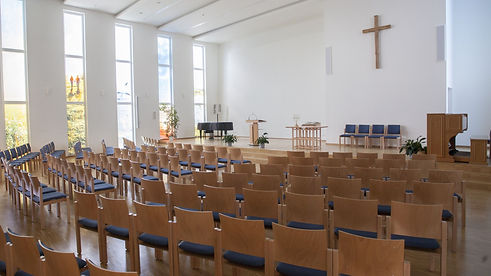
Methodist churches trace their roots to the revival movement associated with John Wesley. They emphasize personal faith, sanctification, love of one’s neighbor, and the conviction that faith should be visible in everyday life.
What connects us:
At Beit Or Ha'Chaim, faith is also meant to be more than words. Prayer, repentance, practical love of one’s neighbor, and living according to God’s will belong together for us.
What distinguishes us:
We place greater emphasis on the biblical and Hebrew background of Scripture and consciously include Torah, Shabbat, Israel, and the biblical feasts in our life of faith. In many Methodist churches, women may serve in ordained pastoral ministry; at Beit Or Ha'Chaim, according to our interpretation of Scripture, we understand priestly and spiritual leadership ministry as a responsibility entrusted to men.
ANGLICANS
The Anglican tradition developed in England and combines Protestant theology with forms of worship that can be strongly liturgical and church-oriented. Within Anglicanism, the spectrum ranges from Evangelical congregations to traditions that are very close to Catholic liturgy.
What connects us:
The importance of the Bible, communal prayer, worship, and an interest in the history of faith.
What distinguishes us:
At Beit Or Ha'Chaim, the emphasis is not on later church liturgy, but on the Jewish roots of Yeshua and the apostles, as well as on Shabbat, Torah, and the biblical feasts. In many Anglican churches today, women may also be ordained as priests or bishops; we do not share this understanding of priestly ministry.


MENNONITES & ANABAPTIST COMMUNITIES
Mennonites and other Anabaptist movements often emphasize personal discipleship, believer’s baptism, community, peacemaking, and a consciously lived Christian life.
What connects us:
For us as well, faith should be lived out in practice. Personal commitment, community, obedience to God, and a consciously lived life are important points of connection.
What distinguishes us:
Beit Or Ha'Chaim combines this practical discipleship with an additional emphasis on Torah, Shabbat, Israel, the biblical feasts, and the Jewish context of the Holy Scriptures. The role of women in spiritual leadership varies among Anabaptist communities; at Beit Or Ha'Chaim, women do not serve in priestly leadership roles.
MORMONS – THE CHURCH OF JESUS CHRIST OF LATTER-DAY SAINTS
The Church of Jesus Christ of Latter-day Saints, whose members are often referred to as Mormons, understands itself as a Christian church. In addition to the Bible, it uses other scriptures, especially the Book of Mormon, Doctrine and Covenants, and the Pearl of Great Price.
What connects us:
Faith in God, engagement with Jesus, family, prayer, and the desire to take faith seriously in everyday life.
What distinguishes us:
Beit Or Ha'Chaim does not recognize additional modern revelation texts such as the Book of Mormon as part of biblical Scripture. Our foundation of faith is the Bible in its Jewish and historical context. Our understanding of God, Yeshua, Israel, and Torah also differs significantly from the theology of The Church of Jesus Christ of Latter-day Saints.

JEHOVAH’S WITNESSES
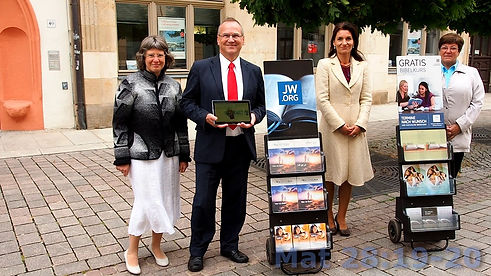
Jehovah’s Witnesses understand themselves as a Christian community, but they differ from Catholic, Orthodox, and most Protestant churches on several central theological points.
They are particularly known for their teachings about the name of God, Jesus, the Trinity, the Kingdom of God, and the end times.
What connects us:
At Beit Or Ha'Chaim, the name of God, the unity of God, the Bible, the coming Kingdom of God, and the importance of the Messiah also play a central role. This means there are certain topics where similar questions are being asked.
What distinguishes us:
We approach these questions from a Messianic Jewish and Torah-oriented perspective. For us, Israel, Shabbat, the biblical feasts, and the Jewish identity of Yeshua are essential to understanding the Holy Scriptures.
MESSIANIC JUDAISM
Messianic Jewish communities believe in Yeshua as the promised Messiah and combine this faith with a conscious return to the Jewish roots of the Bible.
At Beit Or Ha'Chaim, this includes especially:
Shema Yisrael · Yeshua · Torah · Shabbat · Passover · Shavuot · Yom Kippur · Sukkot · Israel · Hebrew · Messianic prophecy
What connects us:
Faith in Yeshua as the Messiah, the significance of Israel, the Jewish background of the Bible, and an interest in Shabbat and the biblical feasts.
What may distinguish us within the Messianic movement:
Messianic Jewish communities are not all theologically identical. At Beit Or Ha'Chaim, we place particular emphasis on the one God of the Shema, the continuing significance of the Torah, Shabbat, and the biblical feasts. We also understand priestly and spiritual leadership within our community as a responsibility entrusted to men.
Our goal is not to create another modern denomination, but to make the Jewish world of the Bible visible again.

DIFFERENT TRADITIONS – ONE DECISIVE QUESTION
Christian churches and faith communities differ on many issues – including baptism, Communion, Shabbat and Sunday, priesthood, Israel, Torah, the end times, and church tradition.
Beit Or Ha'Chaim understands itself as a Bible-centered Messianic Jewish community. Our focus is on understanding the Holy Scriptures in their Jewish, Hebrew, and historical context.
We repeatedly ask:
What does the Bible actually say? How did Yeshua and His first disciples live? What role did Israel, Torah, Shabbat, and the biblical feasts play?
We do not want to devalue other Christian traditions, but rather invite people to read, examine, and rediscover the Jewish roots of faith for themselves.
Our goal is clear: back to the Bible, back to its original context, and toward a deeper understanding of what the Holy Scriptures truly say.